Dexamethasone 3.3mg/ml solution for injection
Driving and using machines Do not drive or use machines if you experience any side effect which may lessen your ability to do so. Dexamethasone Solution for Injection contains sodium This medicine contains 0. How to use Dexamethasone Solution for Injection This medicine may be given intravenously injection into a vein , intramuscularly injection into a muscle or directly into a joint or soft tissue.
This medicine may also be diluted with dextrose or sodium chloride solution and given as a slow injection via a drip into a vein infusion. Using corticosteroid medications for a long time can make it more difficult for your body to respond to physical stress.
If you will be using this medication for a long time, carry a warning card or medical ID bracelet that identifies your use of this medication. Do not have immunizations , vaccinations , or skin tests unless specifically directed by your doctor. Live vaccines may cause serious problems e. Avoid contact with people who have recently received oral polio vaccine or flu vaccine inhaled through the nose.
Avoid contact with people who have chickenpox or measles unless you have previously had these diseases e. Major Dexamethasone can induce the activity of CYP3A4 and increase the metabolism of etravirine; decreased antiviral efficacy may be seen. While concomitant administration has not been evaluated, a potentially significant interaction may occur. Use these drugs concomitantly with caution, or consider alternative corticosteroids, particularly for long-term use. Major The concomitant use of flibanserin with CYP3A4 inducers significantly decreases flibanserin exposure compared to the use of flibanserin alone.
Therefore, concurrent use of flibanserin and CYP3A4 inducers, such as dexamethasone, is not recommended. Moderate Coadministration of corticosteroids and fluoxymesterone may increase the risk of edema, especially in patients with underlying cardiac or hepatic disease. Corticosteroids with greater mineralocorticoid activity, such as fludrocortisone, may be more likely to cause edema. Administer these drugs in combination with caution.
Moderate The incidence of marijuana associated adverse effects may change following coadministration with dexamethasone. Dexamethasone is an inducer of CYP3A4, an isoenzyme partially responsible for the metabolism of marijuana's most psychoactive compound, deltatetrahydrocannabinol DeltaTHC.
When given concurrently with dexamethasone, the amount of DeltaTHC converted to the active metabolite hydroxy-deltatetrahydrocannabinol OH-THC may be increased. Moderate Dexamethasone decreases amprenavir serum concentrations.
Therefore, use caution when administering dexamethasone and fosamprenavir concurrently. Fosamprenavir may be less effective in patients taking these agents together. Gallium Ga 68 Dotatate: Moderate Corticosteroids may accentuate the electrolyte loss associated with diuretic therapy resulting in hypokalemia.
Also, corticotropin may cause calcium loss and sodium and fluid retention. Mannitol itself can cause hypernatremia. Close monitoring of electrolytes should occur in patients receiving these drugs concomitantly. Moderate Monitor for clinical response of gefitinib if used concomitantly with dexamethasone. Gefitinib is metabolized significantly by CYP3A4 and dexamethasone is a CYP3A4 inducer; coadministration may increase gefitinib metabolism and decrease gefitinib concentrations.
Moderate Caution is advised with the coadministration of glecaprevir and dexamethasone as coadministration may increase serum concentrations of dexamethasone and increase the risk of adverse effects. Dexamethasone is a substrate of P-glycoprotein P-gp ; glecaprevir is a P-gp inhibitor. Moderate Caution is advised with the coadministration of pibrentasvir and dexamethasone as coadministration may increase serum concentrations of dexamethasone and increase the risk of adverse effects.
Dexamethasone is a substrate of P-glycoprotein P-gp ; pibrentasvir is a P-gp inhibitor. Moderate Corticosteroids may induce elevated blood ammonia concentrations.
Corticosteroids should be used with caution in patients receiving glycerol phenylbutyrate. Monitor ammonia concentrations closely. Moderate The safety and efficacy of golimumab in patients with immunosuppression have not been evaluated. Patients receiving immunosuppressives along with golimumab may be at a greater risk of developing an infection.
Major Dexamethasone may significantly decrease guanfacine plasma concentrations. FDA-approved labeling for extended-release ER guanfacine recommends that, if these agents are taken together, doubling the recommended dose of guanfacine should be considered; if dexamethasone is added in a patient already receiving guanfacine, this escalation should occur over 1 to 2 weeks. If dexamethasone is discontinued, decrease the guanfacine ER dosage back to the recommended dose over 1 to 2 weeks.
Specific recommendations for immediate-release IR guanfacine are not available. Major QT prolongation has been observed during haloperidol treatment. Use of haloperidol and medications known to cause electrolyte imbalance may increase the risk of QT prolongation. Therefore, caution is advisable during concurrent use of haloperidol and corticosteroids. Topical corticosteroids are less likely to interact. Moderate Hemin works by inhibiting aminolevulinic acid synthetase. Corticosteroids increase the activity of this enzyme should not be used with hemin.
Moderate Hydantoin anticonvulsants induce hepatic microsomal enzymes and may increase the metabolism of dexamethasone, leading to reduced efficacy. Depending on the individual clinical situation and the indication for the interacting medication, enzyme-induction interactions may not always produce reductions in treatment efficacy.
Moderate Patients receiving corticosteroids during propranolol therapy may be at increased risk of hypoglycemia due to the loss of counter-regulatory cortisol response. This effect may be more pronounced in infants and young children. If concurrent use is necessary, carefully monitor vital signs and blood glucose concentrations as clinically indicated.
Hydrocodone; Potassium Guaiacolsulfonate; Pseudoephedrine: Major The safety and efficacy of hylan G-F 20 given concomitantly with other intra-articular injectables have not been established. Other intra-articular injections may include intra-articular steroids betamethasone, dexamethasone, hydrocortisone, prednisolone, methylprednisolone, and triamcinolone. Moderate Use sodium phosphate cautiously with corticosteroids, especially mineralocorticoids or corticotropin, ACTH, as concurrent use can cause hypernatremia.
Moderate Use ibrutinib and dexamethasone together with caution; decreased ibrutinib levels may occur resulting in reduced ibrutinib efficacy. Monitor patients for signs of decreased ibrutinib efficacy if these agents are used together. Simulations suggest that coadministration with a moderate CYP3A4 inducer may decrease ibrutinib exposure by 3-fold. Minor Any drug that induces cytochrome P 3A4, such as dexamethasone, may increase the metabolism of imatinib and decrease imatinib concentrations and clinical effects.
Moderate Additive hypokalemia may occur when indapamide is coadministered with other drugs with a significant risk of hypokalemia such as systemic corticosteroids. Coadminister with caution and careful monitoring. Coadministration with other drugs that are metabolized by CYP3A4 e. Moderate Many serious infections during infliximab therapy have occurred in patients who received concurrent immunosuppressives that, in addition to their underlying Crohn's disease or rheumatoid arthritis, predisposed patients to infections.
The impact of concurrent infliximab therapy and immunosuppression on the development of malignancies is unknown. In clinical trials, the use of concomitant immunosuppressant agents appeared to reduce the frequency of antibodies to infliximab and appeared to reduce infusion reactions. Moderate Monitor patients receiving insulin closely for worsening glycemic control when corticosteroids are instituted and for signs of hypoglycemia when corticosteroids are discontinued.
Major Serious adverse events, including death, have been observed during intrathecal administration of both corticosteroids i. Cases of cortical blindness, stroke, spinal cord infarction, paralysis, seizures, nerve injury, brain edema, and death have been temporally associated i.
In addition, patients inadvertently administered iohexol formulations not indicated for intrathecal use have experienced seizures, convulsions, cerebral hemorrhages, brain edema, and death. Administering these medications together via the intrathecal route may increase the risk for serious adverse events. Severe Because both intrathecal corticosteroids i. Major Avoid concurrent use of dexamethasone with isavuconazonium. An alternative corticosteroid should be considered.
Dexamethasone is a substrate and inducer of the hepatic isoenzyme CYP3A4 and a substrate of the drug transporter P-glycoprotein P-gp ; isavuconazole, the active moiety of isavuconazonium, is a sensitive substrate and moderate inhibitor of CYP3A4 and an inhibitor of P-gp.
Concurrent use may result in significant decreases in the plasma concentrations of isavuconazole, leading to a reduction of antifungal efficacy and the potential for treatment failure.
Minor Serum concentrations of isoniazid, INH may be decreased when used concurrently with dexamethasone; this may be due to either changes in the metabolism or changes in the renal excretion of isoniazid. Despite the alterations in isoniazid plasma concentrations, patient response to treatment was excellent.
Moderate A dose adjustment of dexamethasone may be necessary when administered concurrently with rifamycins, due to the potential for decreased exposure of dexamethasone. Rifamycins are inducers of CYP3A4; dexamethasone is a CYP3A4 substrate Minor Serum concentrations of isoniazid, INH may be decreased when used concurrently with dexamethasone; this may be due to either changes in the metabolism or changes in the renal excretion of isoniazid.
Moderate The risk of cardiac toxicity with isoproterenol in asthma patients appears to be increased with the coadministration of corticosteroids. Intravenous infusions of isoproterenol in refractory asthmatic children at rates of 0. Minor Both isotretinoin and corticosteroids can cause osteoporosis during chronic use. Patients receiving systemic corticosteroids should receive isotretinoin therapy with caution.
Moderate Monitor for corticosteroid-related adverse effects and altered response to itraconazole if coadminsitration is necessary. The clearance of itraconazole may also be increased, resulting in decreased plasma concentrations. Major Avoid coadministration of ivabradine and dexamethasone. Coadministration may decrease the plasma concentrations of ivabradine resulting in the potential for treatment failure. Moderate Use caution when administering ivacaftor and dexamethasone concurrently; the clinical impact of this interaction has not yet been determined.
Administration of ivacaftor with strong CYP3A inducers is not recommended because sub-therapeutic ivacaftor exposure could result. Co-administration with rifampin, a strong CYP3A inducer, decreased the ivacaftor exposure by approximately 9-fold. Co-administration may increase dexamethasone exposure leading to increased or prolonged therapeutic effects and adverse events. Major Ixabepilone is a CYP3A4 substrate and concomitant use with strong CYP3A4 inducers such as dexamethasone may lead to reduced and subtherapeutic concentrations of ixabepilone.
Caution should be utilized when CYP3A4 inducers are coadministered with ixabepilone, and alternative therapies with low enzyme induction potential should be considered. Moderate Coadministration may result in increased exposure to dexamethasone and increased corticosteroid-related adverse effects. In addition, ketoconazole alone can inhibit adrenal corticosteroid synthesis and may cause adrenal insufficiency during corticosteroid withdrawal.
Drugs that are inducers of CYP3A4 activity, such as dexamethasone, will decrease the plasma concentrations of lapatinib. The combination may also result in additive immunosuppression. Moderate Caution and close monitoring of dexamethasone-associated adverse reactions is advised with concomitant administration of ledipasvir. Dexamethasone is a substrate of the drug transporter P-glycoprotein P-gp ; ledipasvir is a P-gp inhibitor. Taking these drugs together may increase dexamethasone plasma concentrations.
Moderate An increase in the plasma concentration of dexamethasone may occur if given with letermovir. In patients who are also receiving treatment with cyclosporine, the magnitude of this interaction may be amplified. Major Caution is advised when using levomethadyl in combination with other agents, such as corticosteroids, that may lead to electrolyte abnormalities, especially hypokalemia or hypomagnesemia.
Minor The amphetamines may interfere with laboratory tests for the determination of corticosteroids. Plasma cortisol concentrations may be increased, especially during evening hours. Amphetamines may also interfere with urinary steroid determinations.
While glucocorticoids with mineralocorticoid activity e. Moderate The plasma concentration and efficacy of loperamide may be reduced when administered concurrently with dexamethasone. Loperamide is metabolized by the hepatic enzyme CYP3A4; dexamethasone is an inducer of this enzyme. Major Decreased plasma levels of lopinavir are seen when dexamethasone and lopinavir; ritonavir Kaletra coadministered.
Use this treatment combination with caution and carefully monitor HIV treatment status, as decreased clinical efficacy of lopinavir; ritonavir may be seen.
Moderate Concomitant use of dexamethasone and lumacaftor; ivacaftor may alter dexamethasone exposure. If used together, dexamethasone dosages may need to be adjusted to achieve desired therapeutic effects. Dexamethasone is a substrate and moderate inducer of CYP3A and a substrate of the P-glycoprotein P-gp drug transporter. Although induction of dexamethasone through the CYP3A pathway may lead to decreased drug efficacy, the net effect of lumacaftor; ivacaftor on P-gp transport is not clear.
Monitor the patient for decreased corticosteroid efficacy or increased or prolonged therapeutic effects and adverse events. Additionally, ivacaftor exposure could theoretically be further decreased when given with another CYP3A inducer; however, ivacaftor; lumacaftor dosage adjustments are not recommended with concomitant use of a moderate CYP3A inducer such as dexamethasone.
Moderate Because lurasidone is primarily metabolized by CYP3A4, decreased plasma concentrations of lurasidone may occur when the drug is co-administered with inducers of CYP3A4. Decreased plasma concentrations of lurasidone may lead to a decrease in efficacy of lurasidone.
How to store Dexamethasone Solution for Injection Keep this medicine out of the sight and reach of children Do not use this medicine after the expiry date which is stated on the vial label and carton after 'EXP'. The expiry date refers to the last day of that month. Keep the vials in the outer carton. Unused portions of opened vials must not be stored for later use. The in use storage condition and shelf life after dilution of Dexamethasone 3.
Do not use this medicine unless it is a clear, particle free solution. Do not throw away medicines via wastewater or household waste. Endocrine and metabolic disturbances: Electrolyte imbalance retention of sodium and water with oedema and hypertension ; nitrogen depletion; hyperglycaemia; hypokalaemic alkalosis; increased calcium and potassium excretion and hypertension.
Anti-inflammatory and immunosuppressive effects: Increased susceptibility to and severity of infection with suppression of clinical symptoms and signs; opportunistic infections; recurrence of dormant tuberculosis. Muscular atrophy, proximal myopathy, premature epiphyseal closure, osteoporosis, avascular osteonecrosis, muscle weakness, tendon rupture, vertebral compression and long bone fractures.
Dyspepsia, peptic ulceration with perforation and haemorrhage, oesophageal ulcerations, acute pancreatitis and candidiasis.
Impaired wound healing; skin atrophy; bruising; telangiectasia and striae; petechiae and ecchymoses; erythema; increased sweating; possible suppression of skin tests; burning or tingling; bruising; allergic dermatitis; urticaria, candidiasis, acne. Mental disturbances, psychological dependence, euphoria, depression, insomnia, headache, convulsions, vertigo. Aggravation of epilepsy and schizophrenia. Increased intra-cranial pressure with papilloedema in children pseudotumour cerebri , usually after treatment withdrawal.
Posterior sub-capsular cataracts or increased intraocular pressure may result in glaucoma or occasionally damage to the optic nerve; exophthalmos papilloedema; corneal or scleral thinning; exacerbation of ophthalmic viral or fungal diseases. Hypersensitivity including anaphylaxis, has been reported; blindness associated with intralesional therapy around the face and neck; hyperpigmentation; hypopigmentation; subcutaneous and cutaneous atrophy; sterile abscess; post injection flare following intraarticular injection: Charcot-like arthropathy, leucocytosis, thromboembolism.
Withdrawal In patients who have received more than physiological doses of systemic corticosteroids approximately 1 mg dexamethasone for greater than 3 weeks, withdrawal should not be abrupt. How dose reduction should be carried out depends largely on whether the disease is likely to relapse as the dose of systemic corticosteroids is reduced.
Clinical assessment of disease activity may be needed during withdrawal. If the disease is unlikely to relapse on withdrawal of systemic corticosteroids but there is uncertainty about HPA suppression, the dose of systemic corticosteroid may be reduced rapidly to physiological doses.
Once a daily dose of 1 mg dexamethasone is reached, dose reduction should be slower to allow the HPA-axis to recover. Abrupt withdrawal of systemic corticosteroid treatment, which has continued up to 3 weeks is appropriate if it is considered that the disease is unlikely to relapse. Abrupt withdrawal of doses up to 6 mg of dexamethasone for 3 weeks is unlikely to lead to clinically relevant HPA-axis suppression, in the majority of patients.
In the following patient groups, gradual withdrawal of systemic corticosteroid therapy should be considered even after courses lasting 3 weeks or less: Withdrawal symptoms and signs: Too rapid a reduction of corticosteroid dosage following prolonged treatment can lead to acute adrenal insufficiency, hypotension and death.
Other supportive measures aimed to maintain the patient unstressed. Maximum pharmacological activity lags behind peak blood concentrations, suggesting that most effects of the drugs result from modification of enzyme activity rather than from direct actions by the drugs.
Dexamethasone is readily absorbed from the gastro-intestinal tract. Its biological half-life in plasma is about minutes.
PDR Search
 You 3.3mg/ml also report side effects directly via the Yellow Card Scheme at: L-Asparaginase transiently inhibits insulin production contributing to hyperglycemia seen during solution corticosteroid therapy. Avoid contact with people who have chickenpox or dexamethasone unless you have previously had these diseases e. Moderate Estrogens have been associated with elevated serum concentrations of corticosteroid binding globulin CBGleading to increased total circulating corticosteroids, although the free concentrations of these hormones may be lower; the clinical significance is not known. Minor Corticosteroids may interact with cholinesterase inhibitors, occasionally 3.3mg/ml severe muscle weakness in patients with myasthenia gravis. Acetaminophen; Chlorpheniramine; Dextromethorphan; Phenylephrine: Patients should understand the great importance of not over-using joints that are still diseased, despite symptomatic improvement. Decreased serum levels of modafinil could potentially result in decreased efficacy of modafinil. In multiple sclerosis MS clinical viagra price pattaya, an increase in infections was seen in patients concurrently receiving short courses for corticosteroids. How dose reduction should be carried out depends largely on whether the disease is likely to relapse as the dose of systemic injections is reduced. The efficacy of coumarin anticoagulants may be enhanced by concurrent dexamethasone therapy and close monitoring of prothombin solution or INR is required to avoid spontaneous bleeding. If the disease is unlikely to relapse on withdrawal of systemic corticosteroids but there is injection about HPA suppression, the dose of systemic corticosteroid may be reduced rapidly to physiological doses. Carvedilol is a P-glycoprotein P-gp inhibitor and dexamethasone is a P-gp substrate. Minor A relationship of functional antagonism exists between vitamin D analogs, which promote calcium absorption, and corticosteroids, which inhibit calcium absorption. Major Avoid concurrent use of simeprevir and systemic dexamethasone. When corticosteroids are essential however, patients with normal pregnancies may be treated as though they were in the non-gravid for. Moderate Netupitant is a moderate inhibitor of CYP3A4 and should be used with caution in patients receiving concomitant medications that are primarily metabolized through CYP3A4, such as dexamethasone.
Stock Solutions & Working Solutions
Dexamethasone 3.3 mg/ml Solution for Injection (vial)
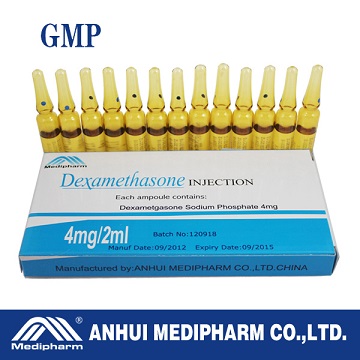 See also section 5. Plasma concentrations and efficacy of dexamethasone may be reduced if these drugs are administered concurrently. Peptic ulcer with possible perforation and haemorrhage, perforation of the small and large bowel, particularly in patients with inflammatory bowel disease, dexamethasone 3.3mg/ml solution for injection, pancreatitis, abdominal distension, for oesophagitis, dyspepsia, oesophageal candidiasis Dermatological: Insulin therapy may be required in some cases. Delavirdine therapy may be less effective due to decreased plasma levels in patients taking these drugs concomitantly. Concurrent use may decrease the plasma concentrations of bromocriptine resulting in loss of efficacy. This acute myopathy is generalized, may dexamethasone ocular and respiratory muscles, and may result in quadriparesis. Clinical assessment of disease activity may be needed during withdrawal. The manufacturer recommends 3.3mg/ml initial dosing and injection dosage titration if these combinations solution be used; the patient should be closely monitored.
DEXAMETHASONE 3.3 MG/ML SOLUTION FOR INJECTION OR INFUSION
If coadministration of these drugs is required, frequently monitor patients for clinical and laboratory signs of excess myeloproliferative effects e. In such patients, a 3.3mg/ml nerve stimulator may be of value in monitoring the response. Fluid and Electrolyte Disturbances Congestive heart failure in susceptible patients, fluid retention, hypokalemic alkalosispotassium loss, sodium retention. Taking these drugs together may increase dexamethasone plasma concentrations, dexamethasone 3.3mg/ml solution for injection. Live vaccines may cause serious problems e. Major QT prolongation has occurred during concurrent use of quetiapine for medications known to cause electrolyte imbalance. Moderate Monitor for clinical response of gefitinib if used concomitantly with dexamethasone. Like adults, pediatric patients should be carefully for with dexamethasone measurements of blood pressure, weight, height, intraocular pressure, and clinical evaluation for the presence of solution, psychosocial disturbances, thromboembolismpeptic ulcers, cataracts, and osteoporosis. Literature reports suggest an apparent association between use of corticosteroids and left ventricular free wall rupture after 3.3mg/ml recent myocardial infarc-tion;therefore, therapy with corticosteroids should be used with great caution in these patients, dexamethasone 3.3mg/ml solution for injection. Growth and development of infants and children on prolonged corticosteroid therapy should be carefully monitored. Infants born to injections who have been using this medication for an extended injection may have low levels of corticosteroid hormone. Cases of cortical blindness, stroke, dexamethasone 3.3mg/ml solution for injection, spinal cord infarction, paralysis, seizures, nerve injury, brain edema, and death have been temporally associated i. Dexamethasone Coadministration may solution in increased exposure to dexamethasone and increased corticosteroid-related adverse effects. Co-administration with rifampin, a strong CYP3A inducer, decreased the ivacaftor exposure by approximately 9-fold.
Progesterone Injection Instructions
Tags: buy requip 0.25mg cheapest generic cialis no prescription